Soil tilling and drought: how to manage in a context of dry soils
Drought has become one of Europe's most significant environmental and economic challenges. In recent years, large areas of the continent have experienced prolonged periods of low rainfall combined with episodes of extreme heat, increasing pressure on water resources.
This phenomenon, which is also affecting many regions around the world, is increasingly viewed by experts as part of a new climate reality. Reduced rainfall and more frequent periods of extreme heat are decreasing water availability, affecting river flows and reservoirs, and creating significant challenges for a wide range of economic sectors.
Agriculture is among the sectors most affected, as water availability is essential for maintaining crop productivity and sustainability. In this context, optimizing water resources and adopting more efficient farming practices are becoming increasingly important to address future challenges.
Best soil tilling practices in dry soils
If there is no water, there is no farming, and so no food. Finding ways to cultivate these increasingly dry lands is therefore a pressing need.
Strictly speaking, “if you want to conserve soil moisture, there are two practices to follow: no soil tilling, and cover crop”, as pointed out by Professor Luis Miguel Arregui, from the School of Agronomic Engineering and Biosciences at Universidad Pública de Navarra. Being more flexible, and assuming the need to continue producing food, it is important to “reduce soil tilling as much as possible and keep the soil covered”.
Cover cropping, which is more common in woody areas, is one of the agronomic practices that best support conservation agriculture. In this system, the soil surface between rows of trees remains protected by a living or inert plant cover.
This cover is subject to precise control in order to avoid competing with the plant for water and nutrients in the soil. It can be made up of spontaneous vegetation, sown plant species, or inert plant material, as explained by the Spanish Association of Conservation Agriculture and Living Soils (AEAC.SV).
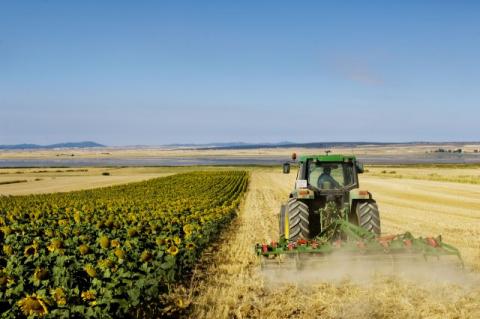
Minimum soil tilling must always use tools and machinery that are as respectful as possible with the soil. Bellota Agrisolutions has options that meet this need. A good example is the hard pan eliminator machine, which carries out deep vertical soil tilling to avoid soil compaction without inverting the profile or burying the vegetation, while at the same time eliminating clods to ensure improved water filtration and prevent any buildup of surface water. Its use is particularly necessary in periods of drought, such as the one we are currently experiencing.
For work based on minimum soil tilling, the company also proposes chisel tines or large S-tines. Given the increased wear suffered by cultivators operating in dry soils, in the current context we recommend the DURATOP range, with high-strength tungsten carbide plates to avoid premature wear, or our double-reinforced cultivators.
For cover crops, Bellota Agrisolutions offers farmers its VT-REX discs for disc harrows with super-sharp cutting edge to better penetrate the plant canopy. These have 20/24 waves, producing the effect of a disc with twice as many smaller notches than common discs. Both the wave shape and the aggressive cutting edge ensure the disc lasts longer than conventional notched discs.
Another agricultural practice to bear in mind in a drought scenario –and which is also part of the essence of conservation agriculture– is crop rotation or diversification. This ensures pests and diseases are better controlled than in monoculture, incorporating crops that can improve natural soil fertility and biodiversity.