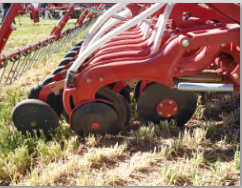
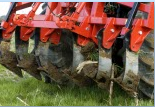
Hard pan eliminator shanks and their impact on soil structure
Hard Pan Eliminator or subsoilers are essential tools for improving soil structure and correcting compaction problems that limit root development and crop performance. The type of shank used directly affects soil behavior, energy consumption, and overall working efficiency.
Curved shanks: higher efficiency with lower power demand
Curved shanks loosen the soil through a lifting and fracturing effect, bringing clods to the surface while minimizing disturbance of the soil profile. Their main advantage is the lower draft power required, resulting in reduced fuel consumption and improved efficiency.
Straight shanks: strong penetration capability
Straight shanks provide excellent penetration and lift the soil along their working path. While effective at breaking compacted layers, they require more power at the same working depth than curved shanks, increasing energy demand.
Efficient Subsoiler Use Recommendations
A subsoiler generally requires 35–45 HP to work at 30 cm, and up to 55–65 HP to reach 70 cm, depending on soil conditions and shank design. For optimal results, the soil should be friable, neither too dry nor too wet. Subsoiling is usually recommended every three years, crossing passes for better results.
Subsoilers are essential for maintaining soil health and improving seeding efficiency, especially under no‑till systems. Learn more about the benefits of the Bellota curved‑shank subsoiler in our detailed video.