Differences Between Moldboard Plow and Chisel Plow in Soil Preparation
In agriculture, choosing the right tillage system is a key factor in optimizing fieldwork efficiency and crop performance. Among the most commonly used soil preparation methods are the moldboard plow and the chisel plow, each with specific characteristics and applications. Below are the main differences between these two systems.
Moldboard Plow: Effectiveness in Compacted Soils
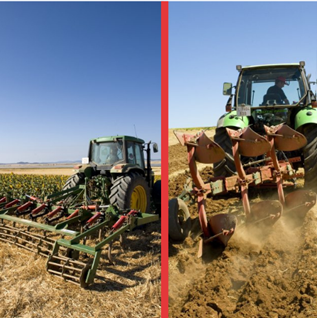
The moldboard plow is one of the most traditional and widely used agricultural implements. It consists of a metal structure equipped with moldboards that cut, lift, and turn over the top layer of soil, creating deep furrows.
This type of tillage is particularly effective in heavy and compacted soils, as it easily breaks the soil surface. It is also highly efficient for weed control and incorporation of crop residues, which are buried deep into the soil. This process helps improve soil structure and, under certain conditions, enhances its water-holding capacity.
However, moldboard plowing causes greater soil disturbance and requires higher energy consumption compared to reduced tillage systems.
Chisel Plow: Soil Aeration and Decompaction
The chisel plow operates differently from the moldboard plow. Instead of turning the soil over, it fractures and loosens the soil without inverting the soil layers, using shanks that penetrate deeply.
Its main purpose is soil decompaction, improving aeration and drainage, which supports better root development. Although it is less effective at weed control, the chisel plow conserves more crop residue on the surface and reduces disruption of the soil structure.
Working conditions are critical: the chisel plow requires a lower soil moisture content than the moldboard plow. It is not recommended to use this implement in excessively wet soils, nor to operate at excessive depths or inadequate speeds, as these factors reduce effectiveness and may cause secondary compaction.
Combining Both Systems for Greater Efficiency
In certain agricultural practices, both systems are combined to take advantage of their respective benefits. A common example is the use of two-row cultivators, where:
- The first row is equipped with chisel-type shanks for soil decompaction.
- The second row uses moldboard-type tools to refine seedbed preparation and control weeds.
This approach allows for more comprehensive soil preparation, balancing depth, aeration, and weed management.
Choosing the Right System Depends on Soil Conditions and Tillage Objectives
In conclusion, the choice between a moldboard plow and a chisel plow should be based on soil characteristics, soil condition, and the specific goal of the tillage operation.
The moldboard plow is ideal for compacted soils and intensive weed control, while the chisel plow is better suited for deep decompaction and improving soil structure without inversion.
Understanding these differences helps farmers optimize performance, reduce costs, and improve the overall sustainability of their agricultural operations.