Agricultural soil and the role of implements in its conservation
Agricultural soil: a living and complex system
Agricultural soil is far from being a passive organism. It is the result of hundreds of thousands of years of microscopic activity, where countless living and mineral elements interact. Its behaviour resembles that of a true ecosystem in constant evolution.
Each soil is unique, displaying its own physical, chemical and biological characteristics, which directly influence crop development and the way the soil should be worked.
The soil profile and its role in agriculture
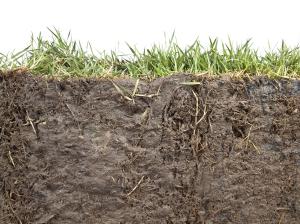
Soil science studies the soil profile as a vertical section made up of different layers or horizons.
From an agricultural point of view, only those layers that can be reached by plant roots are relevant, as they directly affect crop establishment and growth.
Soil knowledge as the foundation of innovation at Bellota Agrisolutions
At Bellota Agrisolutions, in‑depth knowledge of soil behaviour and practices such as ploughing, tillage and sowing is essential to develop products that respect the environment, especially the soil, the farmer’s main working tool.
This approach has positioned the company as a global reference in agricultural spare parts, offering more than 8,000 products in over 80 countries.
How do agricultural implements affect the soil?
Agricultural implements are designed to modify soil conditions to improve crop establishment and promote healthy root development.
There are many types of soil‑working equipment, commonly classified as:
- Primary tillage equipment
- Secondary tillage equipment for seedbed preparation
- Equipment for inter‑row work
- Equipment for forced cultivation substrates
- Alternative soil‑working solutions
The most common tools include tines, points, discs and rotary tiller blades.
Actions performed by implements on the soil
Implements act on the soil through different mechanical actions such as cutting, shearing, impact, displacement, projection or inversion.
Selecting the right implement is key to achieving a balance between agronomic efficiency and soil conservation.
Training and technology at the service of farmers
Bellota Agrisolutions’ product portfolio includes solutions designed in line with these principles to improve performance while protecting the soil.
In addition, the company offers its Basic Course in Agricultural Machinery free of charge on its website, an essential resource for professionals seeking to deepen their knowledge of agricultural machinery and farming principles.