Did you know that the history of the plough dates back more than 5,000 years?
History of the plough
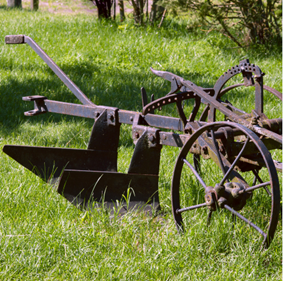
The plough is one of the most effective agricultural implements for primary soil tillage, as it allows the soil profile to be worked and turned over completely. As working depth increases, greater strength is required, involving higher traction power and increased fuel consumption.
The plough emerged over 5,000 years ago and represented a major agricultural breakthrough. Developed from the hoe or shovel and combined with animal traction, it spread from the Mediterranean basin and reached a key stage of development during Roman times. Many of its design principles are still relevant today.
Innovations in plough design
Working the soil at an angle and adding wings to the share made it possible to increase working depth, improving both sowing and soil loosening. In Central Europe, high rainfall conditions led to the development of mouldboards, double handles and forecarriages. Today, mouldboard ploughs continue to evolve through advanced materials, heat treatments and integrated safety systems.
Materials used in Bellota mouldboards
Bellota mouldboards are manufactured using boron steel, triplex steel or case-hardened steel, each with specific heat treatments to ensure excellent wear resistance. Ploughshares forged in boron steel provide outstanding durability and performance in demanding tillage conditions.